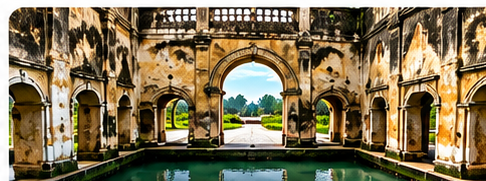
Among the details that make Hukitola notable is a practical feature that can be easy to overlook in photographs: its historic rainwater-collection arrangement. The Kendrapara district administration records a sloping roof that directed rainwater into four large pots, as well as an underground rainwater-harvesting system.
The roof was part of the water system
Instead of allowing rain to run away from the building without being collected, the roof’s slope helped guide water towards collection points. The district administration says the collected water was used for drinking by merchants throughout the year. That documented detail is the clearest starting point for understanding the design.
Why water collection mattered
Hukitola stands on Jambu Island in the Bay of Bengal, a coastal setting where access to dependable fresh water would have mattered to people working around the port and storage building. Capturing rainfall could help make use of a seasonal resource. This is a reasonable explanation of the system’s practical value, but the available district summary does not provide a measured capacity or a full engineering drawing, so exact volumes should not be guessed.
Four large pots and an underground system
The official district page describes four large pots receiving roof water and separately mentions an underground rainwater-harvesting system. It does not fully explain how every component connected, how much water could be stored or whether the system is operational today. Those questions would need conservation records, technical documentation or on-site interpretation to answer confidently.
A useful lesson in climate-aware design
Hukitola’s recorded water feature is a reminder that historic buildings can combine structure and everyday utility. The roof was not only a covering; its shape helped manage rain. For modern readers, the broader lesson is to look for the relationship between a building and its environment rather than judging heritage architecture only by its age or appearance.
It would be misleading to claim that Hukitola’s system is identical to a modern rainwater-harvesting installation or to assign it technical performance figures without evidence. Its documented design is interesting enough without adding unsupported details.
Can visitors see the system today?
Before planning a visit, check current access and local arrangements with the relevant authorities. Do not assume that every feature is accessible, operating or safe to approach. If you visit, follow site guidance and avoid touching or entering historic structures or water-storage areas.
Source
This article is based on the Kendrapara District Administration’s official Hukitola tourism page. Further technical claims should be added only after consulting reliable conservation or engineering records.
Related reading
Read the wider history of Hukitola’s coastal heritage building, or use our route and safety checklist if you are planning a visit.